Make the first step clear
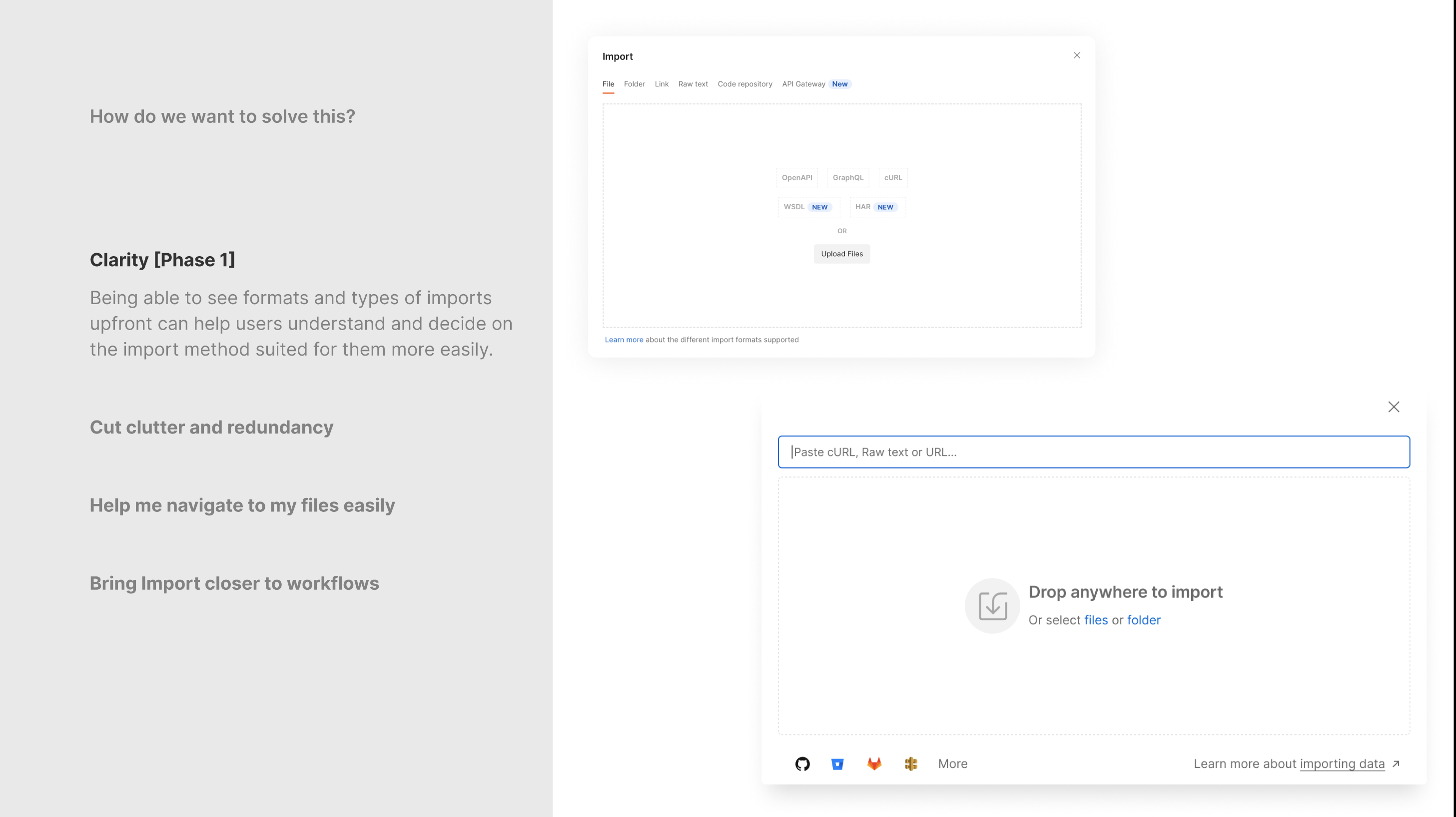
Supported formats became visible at the point of entry, including common paths such as files, folders, raw text, URLs, and repositories.

Staff product designer at ServiceNow with 10+ years of experience designing API tooling, AI infrastructure, knowledge graphs, and data generation systems.
I redesigned how developers bring existing API work into Postman, reducing the friction between importing their work and getting back to building.
Import was one of Postman’s most important entry points, but more than 60% of developers abandoned it midway.
Developers were not starting from scratch. They arrived with API definitions, collections, environments, requests, and repositories created in other tools. Import was how that existing work became useful inside Postman.
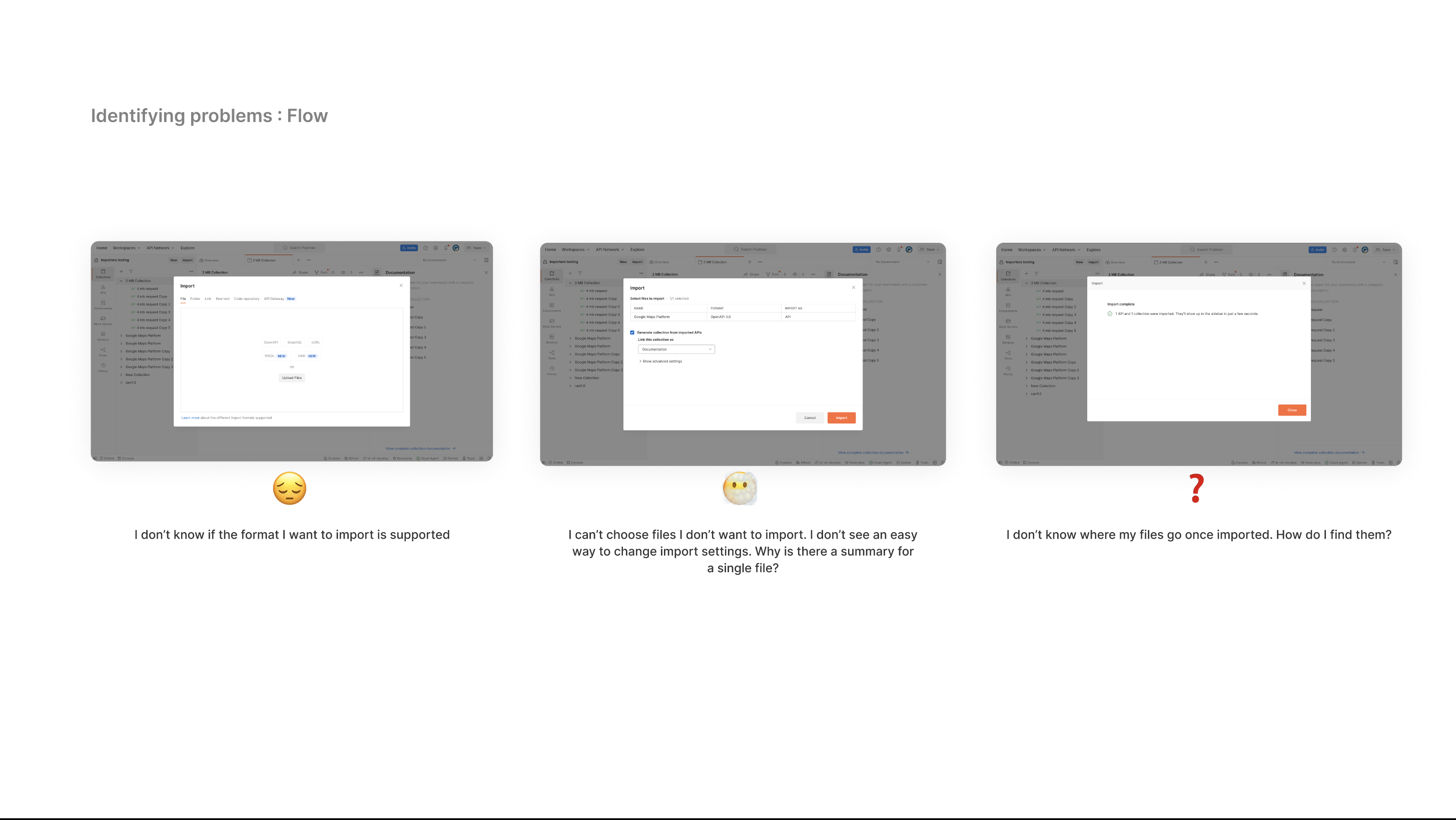
The journey treated every import similarly, added decisions before users understood the outcome, and gave little reassurance about where their files would go next. A necessary setup step had become a barrier to getting started.
The problem was not uploading a file. It was understanding what Postman supported and what would happen after import.
7 in 10 participants could not find the import option they needed. Supported formats were hidden behind technical labels, while the large drop zone suggested capabilities the product did not actually offer.
Research also exposed a break in continuity. Developers could finish an import without knowing whether it had worked, where the new items lived, or how to continue with them.
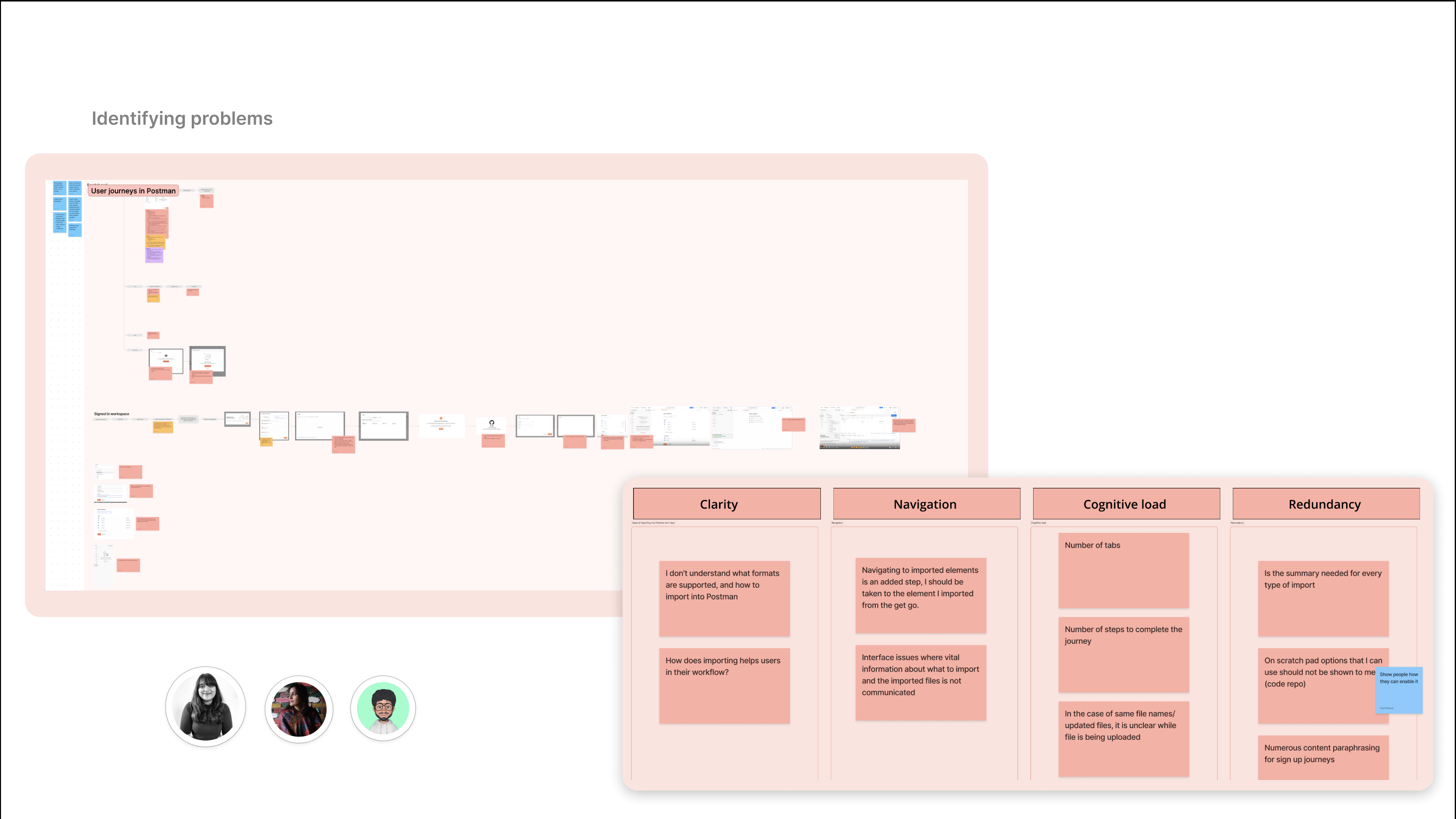
We set one north star: help developers bring work into Postman and start using it as quickly as possible.
Make choices legible. Show formats and import methods upfront in language that matches developers’ expectations.
Remove unnecessary decisions. Keep confirmation and configuration only where complexity or risk makes them useful.
Preserve momentum. Make progress visible and take developers directly to the work they just imported.
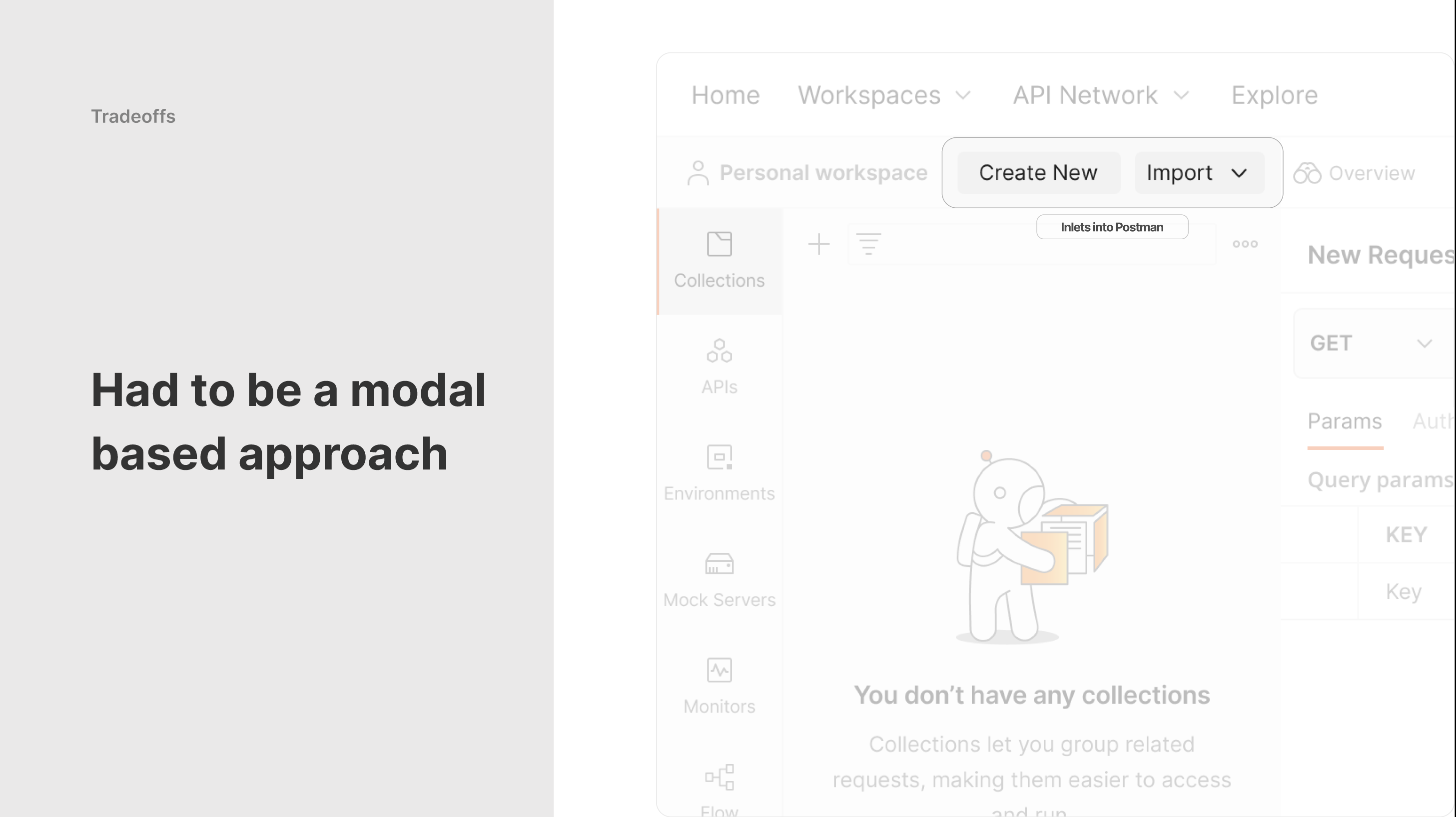
The long-term opportunity was to bring import into the places where developers already worked, but the primary entry point still had to remain a modal.
Keep the modal, make it work harder. The modal was an established inlet into Postman and supported the breadth of files, folders, raw text, URLs, and integrations developers needed. Replacing it would have expanded the scope and risk of the project, so I focused on making those options easier to discover without adding more visual noise.
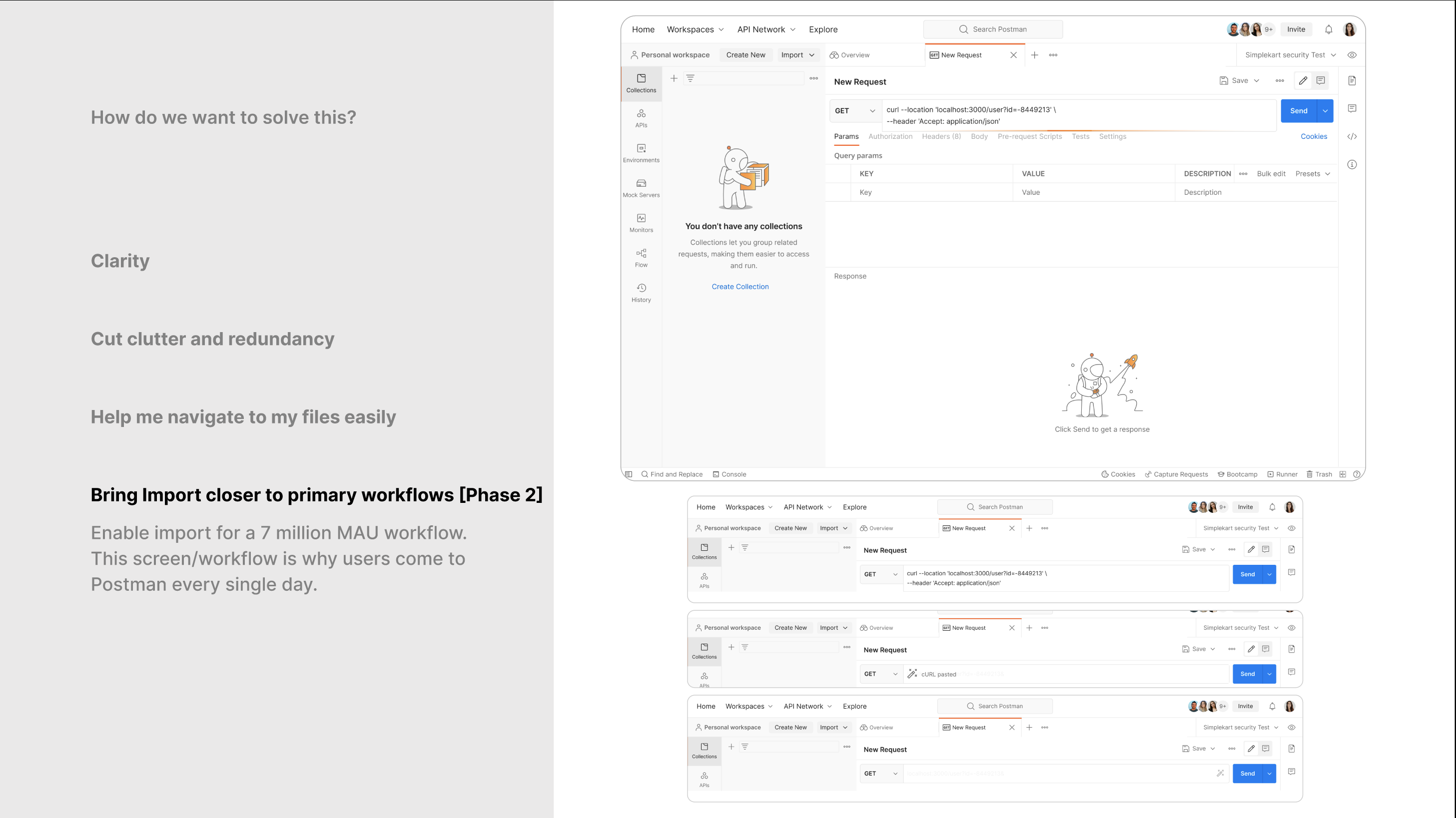
Extend the workflow without replacing it. A modal could support complex and bulk imports, but it could not make every import feel contextual. I explored the request builder as a complementary path, reusing the familiar paste and send interaction to recognize and import cURL commands where developers already did most of their work.
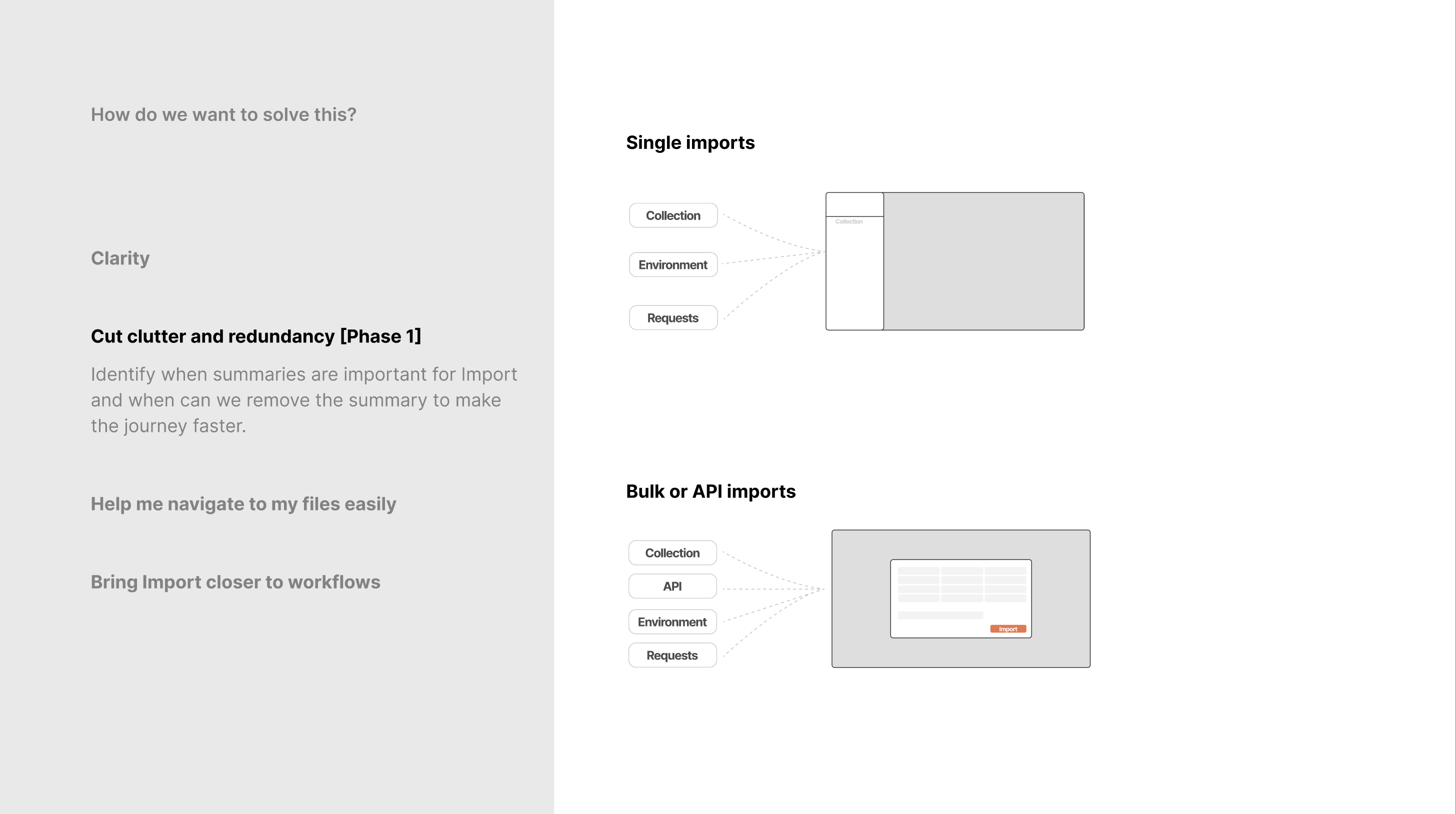
The redesign adapted to the size and context of the import instead of forcing every developer through the same journey.
Supported formats became visible at the point of entry, including common paths such as files, folders, raw text, URLs, and repositories.
Single imports could open directly, while bulk and API imports retained the controls needed to review items and manage settings.
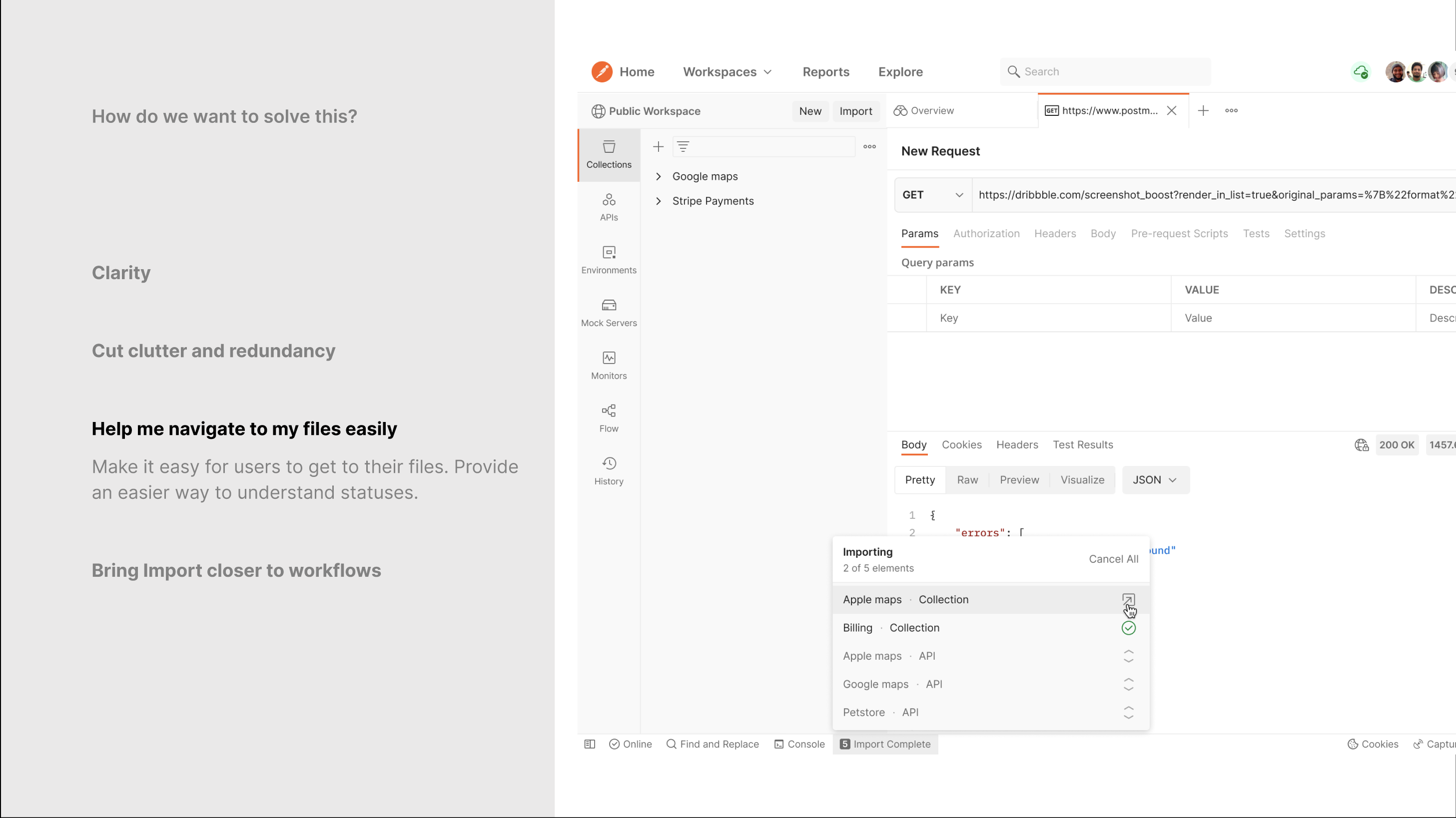
Import moved closer to primary workflows, progress no longer blocked the interface, and completion feedback linked developers to their new items.
I designed cURL import to work inside the request builder, where developers already spent most of their time. The query bar could recognize a pasted cURL command and convert it when the developer selected Send, reusing a familiar pattern to complete a new job without interrupting their flow.
A shorter, clearer journey helped more developers move from bringing work in to actively using Postman.
87% fewer drop-offs. Simplifying the flow dramatically reduced abandonment.
71% imported successfully. More developers completed the journey once choices were made visible upfront.
13× faster. The time required to import and get started fell to approximately nine seconds.
50% faster for teams. Customers reported a meaningful reduction in the time required to bring work into Postman.
Scaled through the design system. I added reusable components and patterns for asynchronous processes to Postman’s design system, extending the work across the product.
Alongside this work, I’ve been designing other parts of the platform and exploring adjacent problems across API infrastructure.