AI admin
An admin is a ServiceNow persona who deploys and manages AI solutions across the organization.

Staff product designer at ServiceNow with 10+ years of experience designing API tooling, AI infrastructure, knowledge graphs, and data generation systems.
I led the design of ServiceNow’s first knowledge graph builder, helping admins define the relationships that give enterprise AI context.
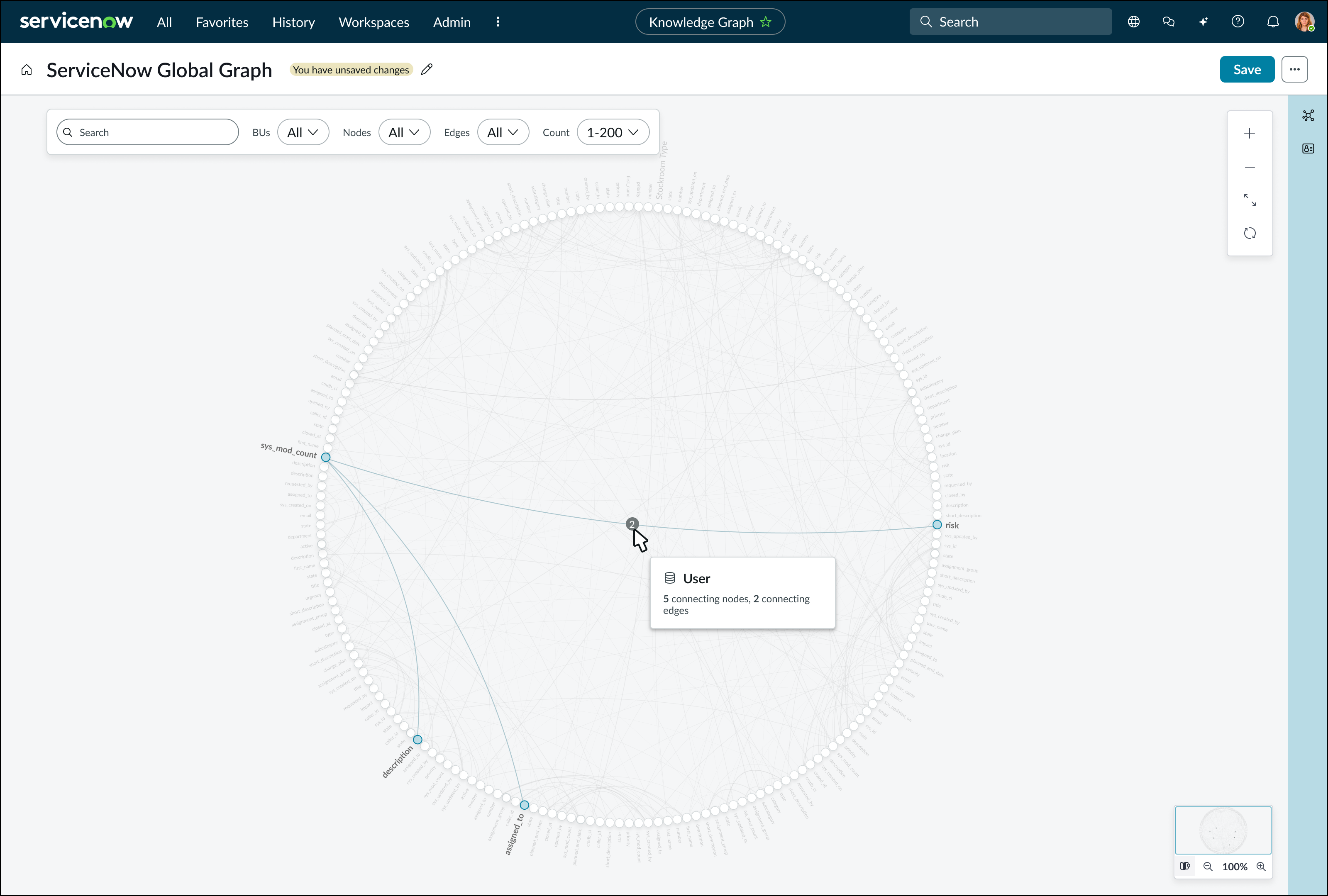
Why does that matter? Consider something as simple as ordering a laptop.
Enterprise AI isn't limited by missing data. It's limited by missing relationships.
Every answer inside an enterprise already exists. The problem is that information lives across hundreds of disconnected systems that don't understand each other. A single prompt can require context from people, records, assets, and policies across separate systems.
The disconnect plays out across teams and systems. Different language, permissions, and reasoning models make it difficult for AI to connect enterprise knowledge accurately.
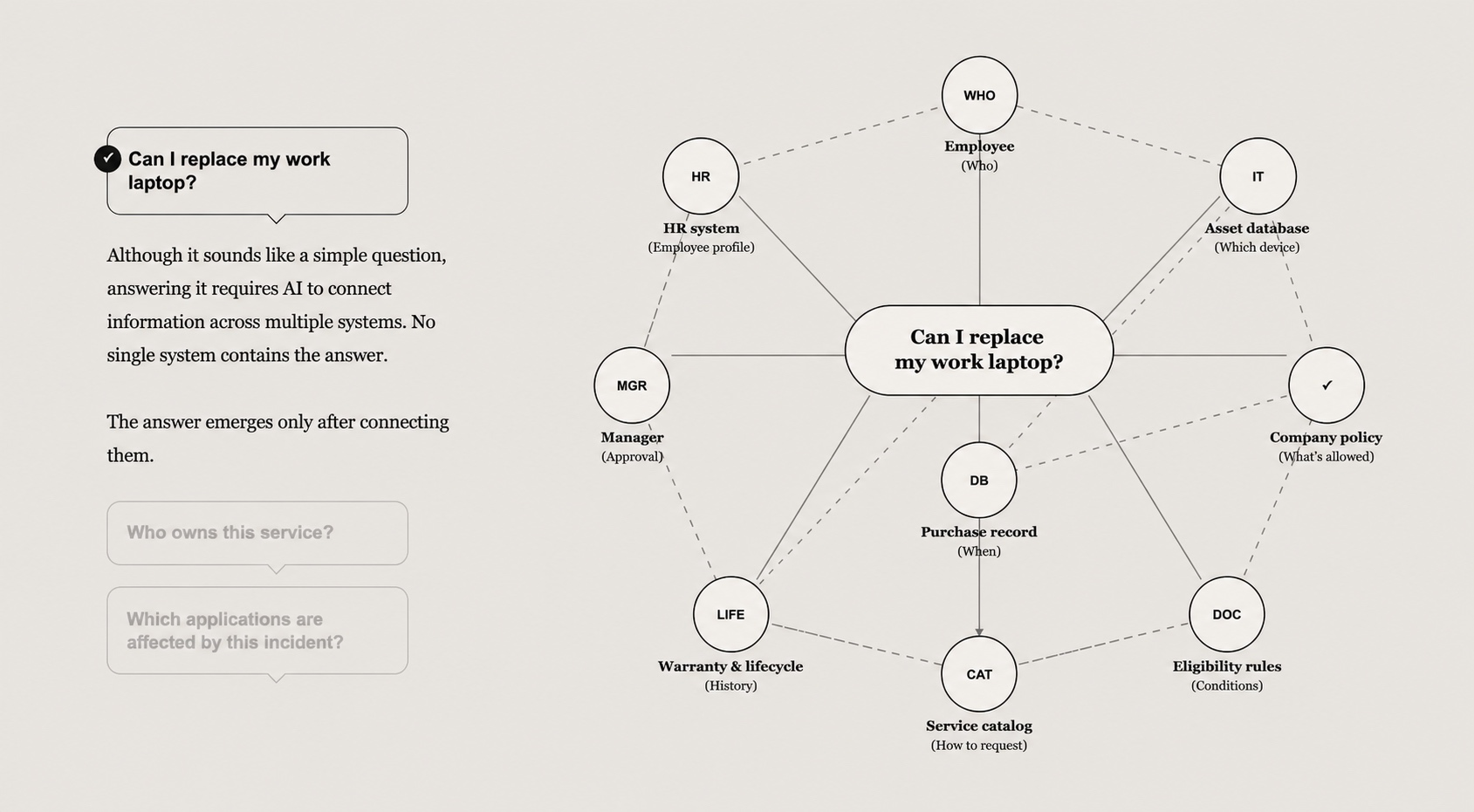
Humans naturally think in relationships. Enterprise systems think in records, tables, and workflows.
My job was to design the missing layer between them → a system that made enterprise relationships visible, understandable, and configurable for AI admins who had never touched graph theory.
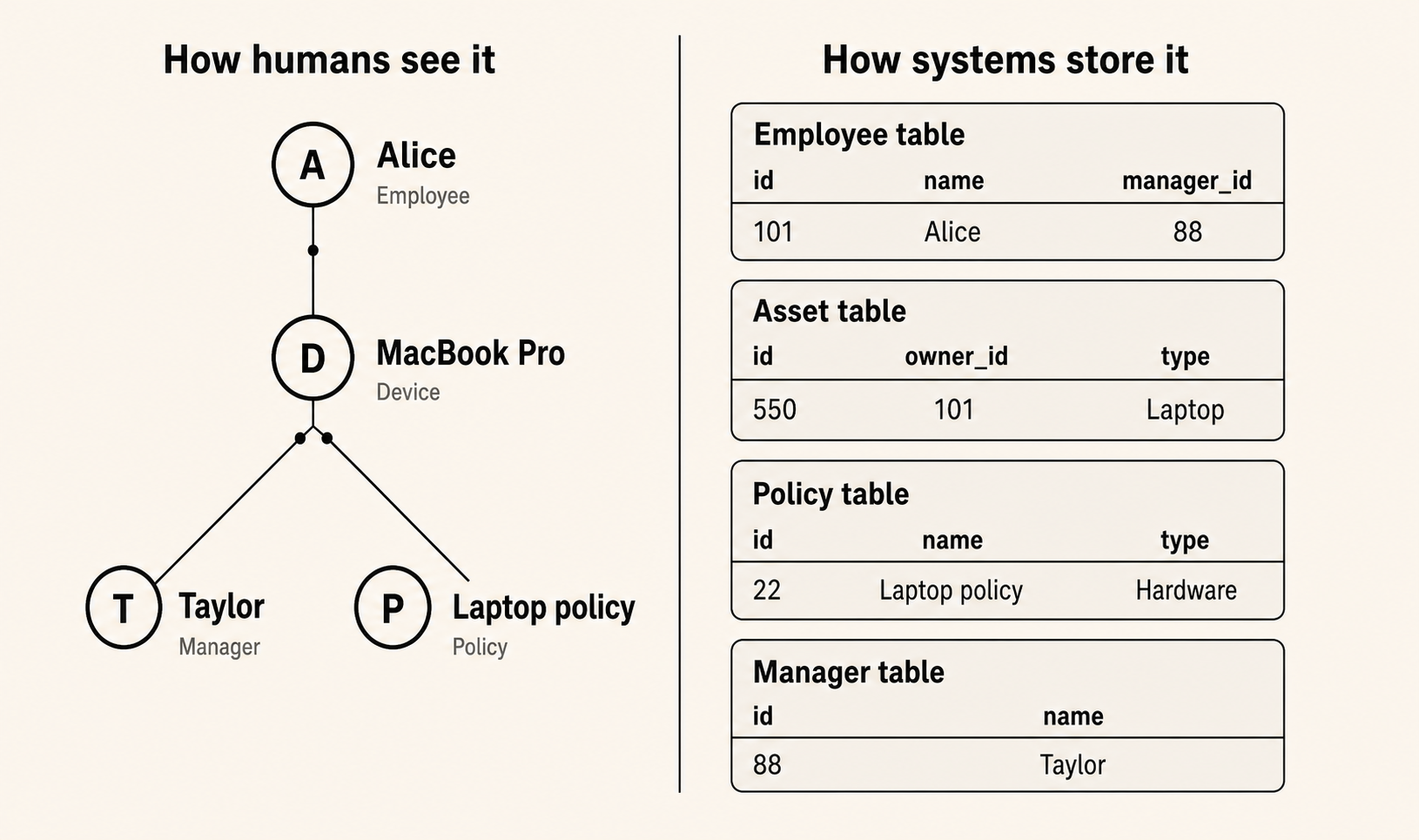
The Knowledge Graph Builder is, at its core, a context authoring tool. It doesn't just visualize data. It gives AI the relational context it needs to reason across systems.
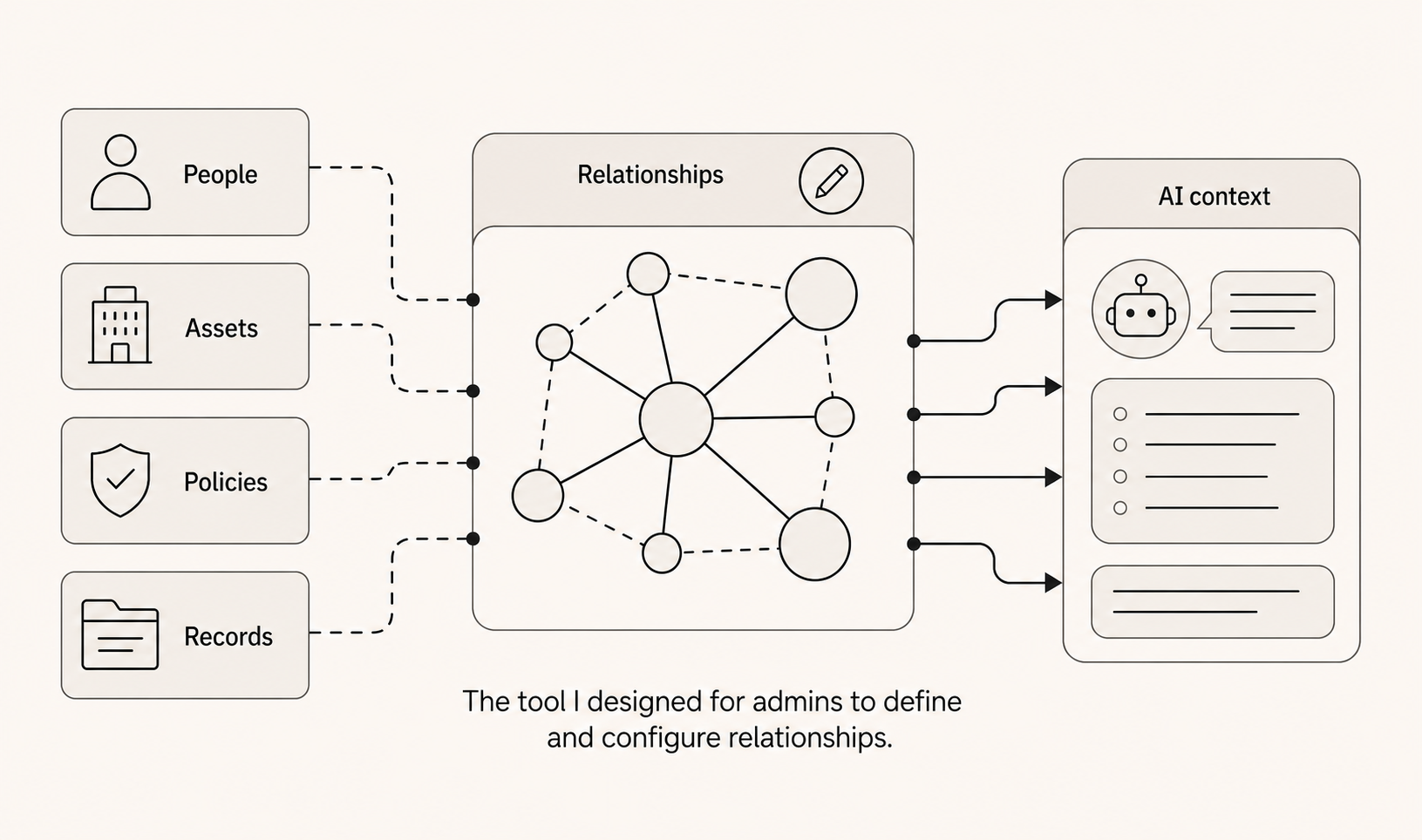
The next section uses a few graph-specific terms. Use this quick reference before continuing.
An admin is a ServiceNow persona who deploys and manages AI solutions across the organization.
A connected view of enterprise entities and relationships that gives data context and meaning.
An entity represented by a ServiceNow table, such as Employee or Incident.
A relationship connecting two nodes, such as an employee “reports to” a manager.
A list of records organized into columns, used as the data source for a node.
A no-code workspace for creating graph schemas and configuring nodes, properties, and relationships.
Building a knowledge graph builder wasn't just designing an interface. Every major decision balanced graph theory, enterprise workflows, engineering constraints, and user trust.
Four questions shaped the product: where configuration happens, what types of edges exist, how relationships are defined, and how the graph stays usable at scale.
Technical concepts had to be clear and usable for administrators who were not data experts.
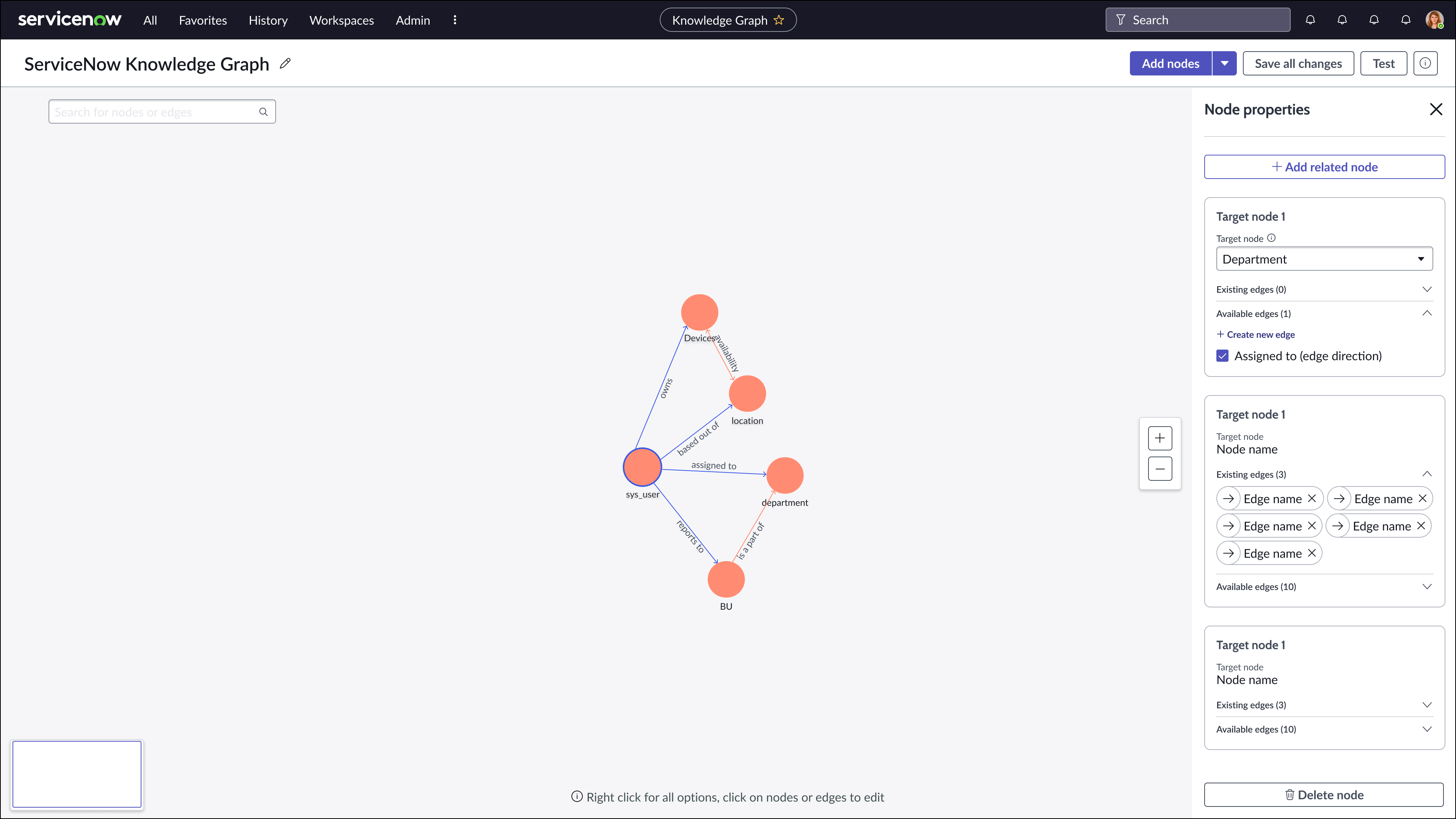
ServiceNow's existing tools all use panel-based configuration, but graphs are spatial. We chose the panel to reduce learning curve, then pushed the canvas to be an active trigger point.
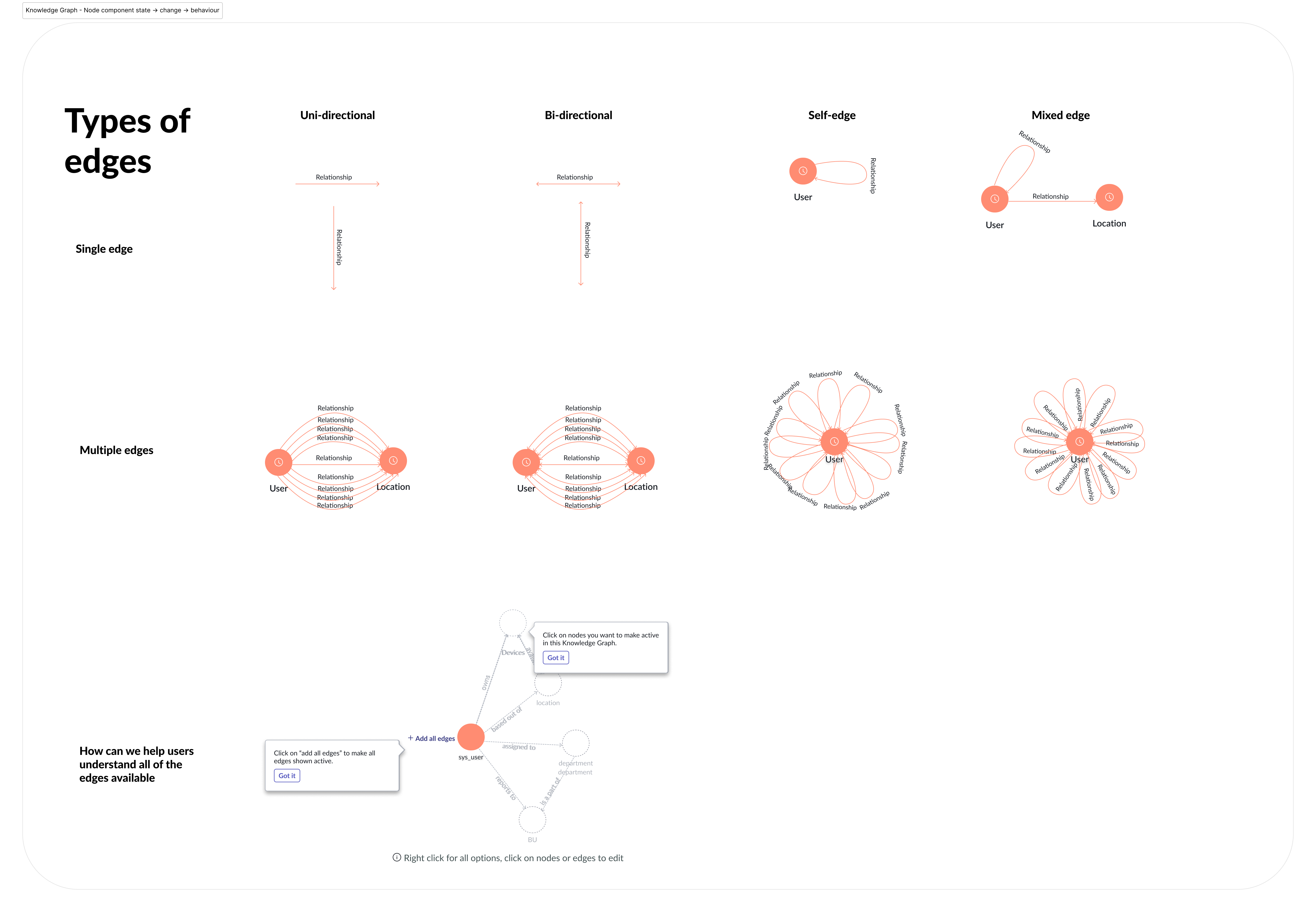
Multiple edges between two nodes quickly collapse into noise. We grouped relationship types and surfaced identity at scale while keeping distinct tooltips.
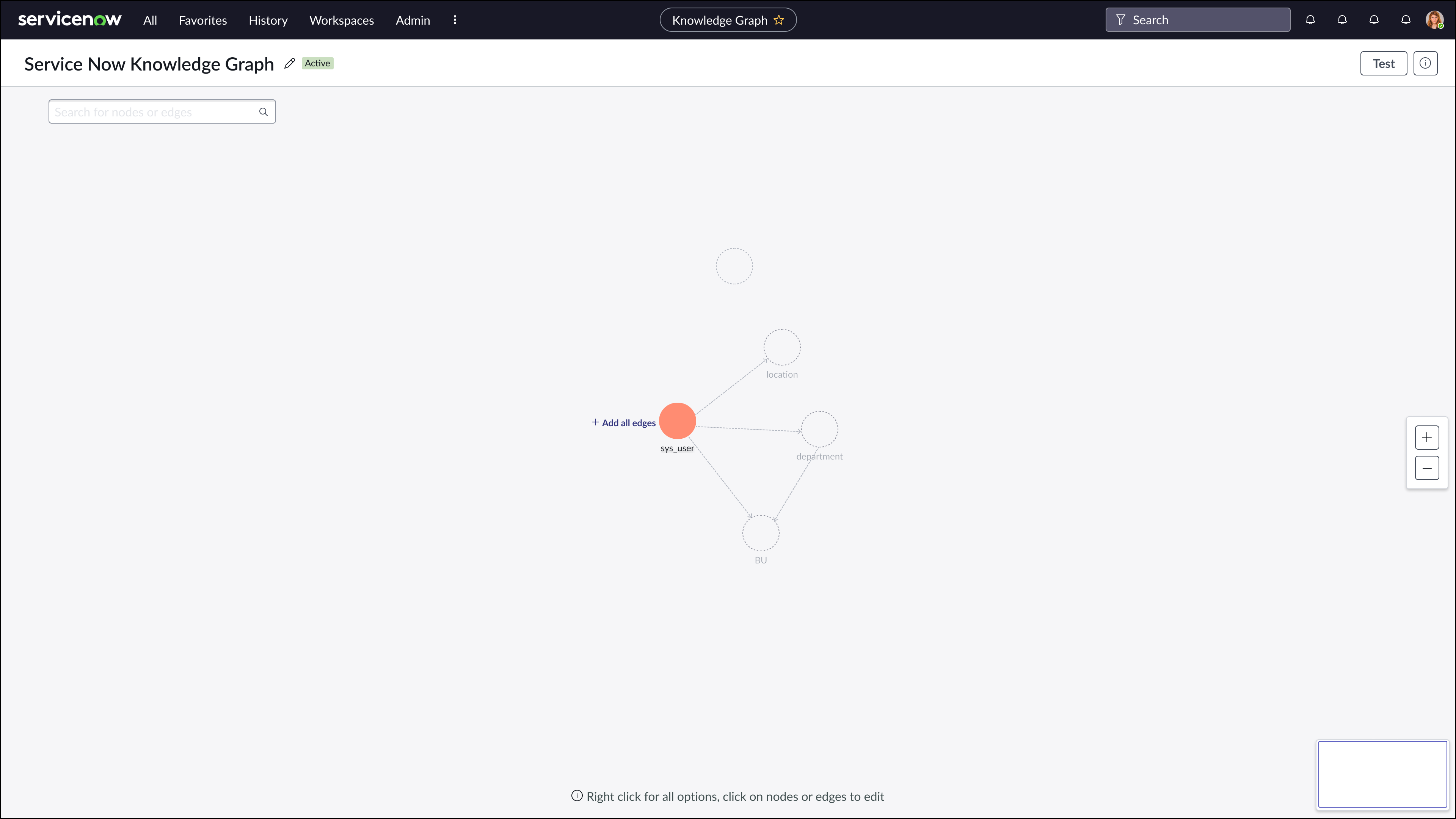
The team's mental model used tables, lists, and forms. Testing revealed that admins wanted to propose connections from existing schema, not begin from a blank canvas.
Enterprise knowledge graphs grow to thousands of nodes. Progressive disclosure, zoom behavior, and a lightweight full-graph state keep the experience understandable.
Built from 0→1. Designed and shipped ServiceNow's Knowledge Graph Builder, making it possible for administrators without graph expertise to model and configure enterprise relationships.
Adopted across 8+ workflow areas. Expanded across HRSD, CSM, WSD, ITAM, ITOM, SecOps, Industry workflows and Finance, moving Knowledge Graph beyond its initial use case into shared platform infrastructure.
Became a foundation for AI experiences. The knowledge layer expanded into AI Search, AI Agents, Now Assist, NLQ and personalization, giving these experiences shared context about enterprise data and relationships.
Created a reusable platform capability. The builder became a shared component that could support domain-specific knowledge graphs rather than requiring teams to build graph tooling independently.
Patent pending. The interaction and system approach contributed to an ongoing patent application.