Anusha Tigali

Designing relational data generation for
enterprise AI

Designed a multi-table synthetic data generator that creates realistic, connected enterprise data for testing and evaluating AI.

I lead design for Now Assist Data Kit, ServiceNow’s tooling for creating, curating, and managing the data teams need to develop and evaluate AI. One of the problems we were solving was how teams could get enough representative data to reliably test AI skills and agents.

Before an AI skill or agent goes live, teams need to understand how it behaves across the situations it might encounter. That means giving it representative examples, running the AI against them, and evaluating the results.

Data Kit includes three types of data generators. I designed the experience for each, including the multi-table generator featured in this case study.

The problem

Evaluating AI starts with good data.

To evaluate an AI agent for IT support, teams need to test common issues, escalations, and unusual situations.

That requires hundreds of realistic examples. Production data can contain sensitive information, while creating those examples manually takes time.

Synthetic data provides representative test records without exposing production information.
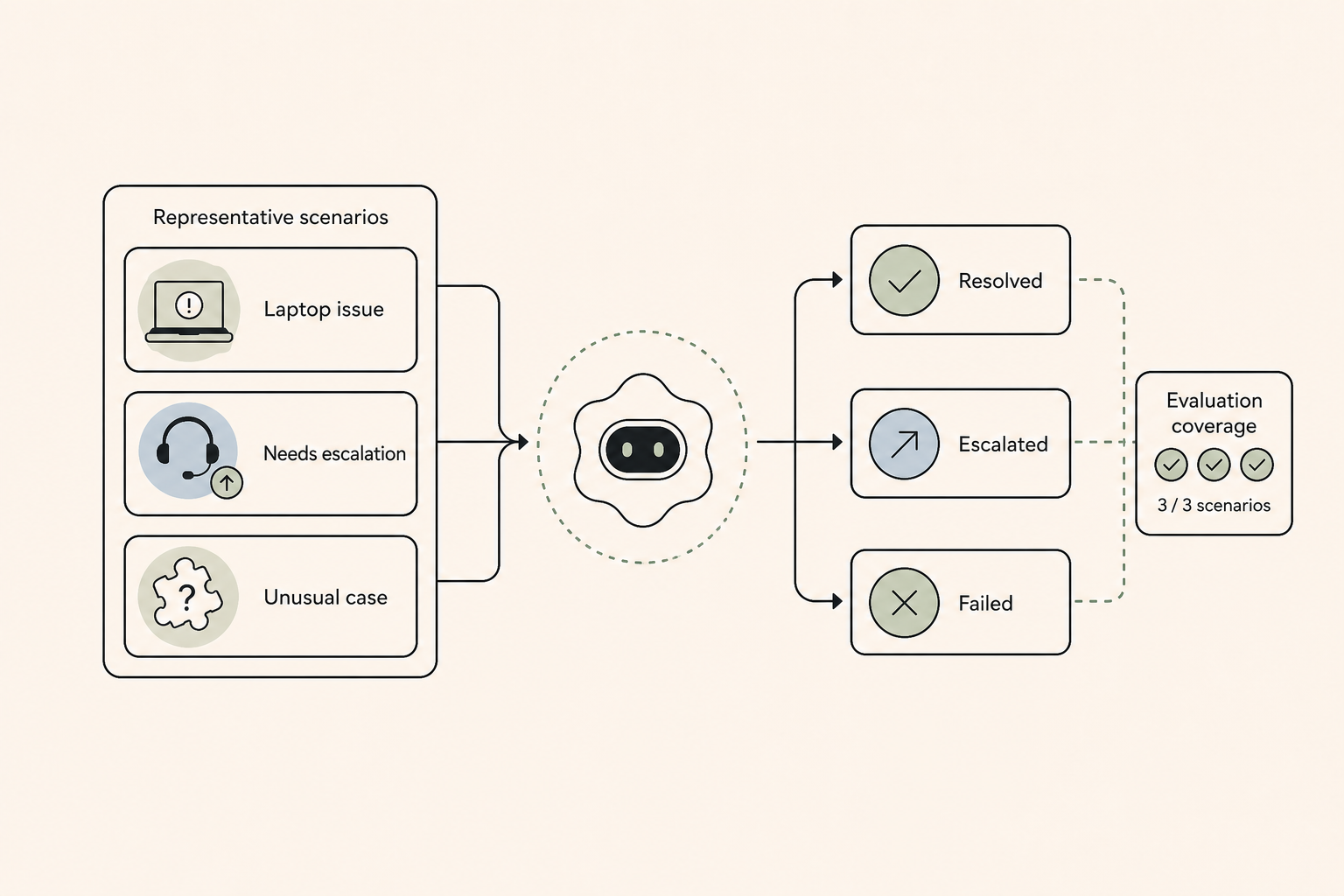
Three representative support scenarios flow through an AI agent and produce resolved, escalated, and failed outcomes for evaluation.

A simple action creates complicated data

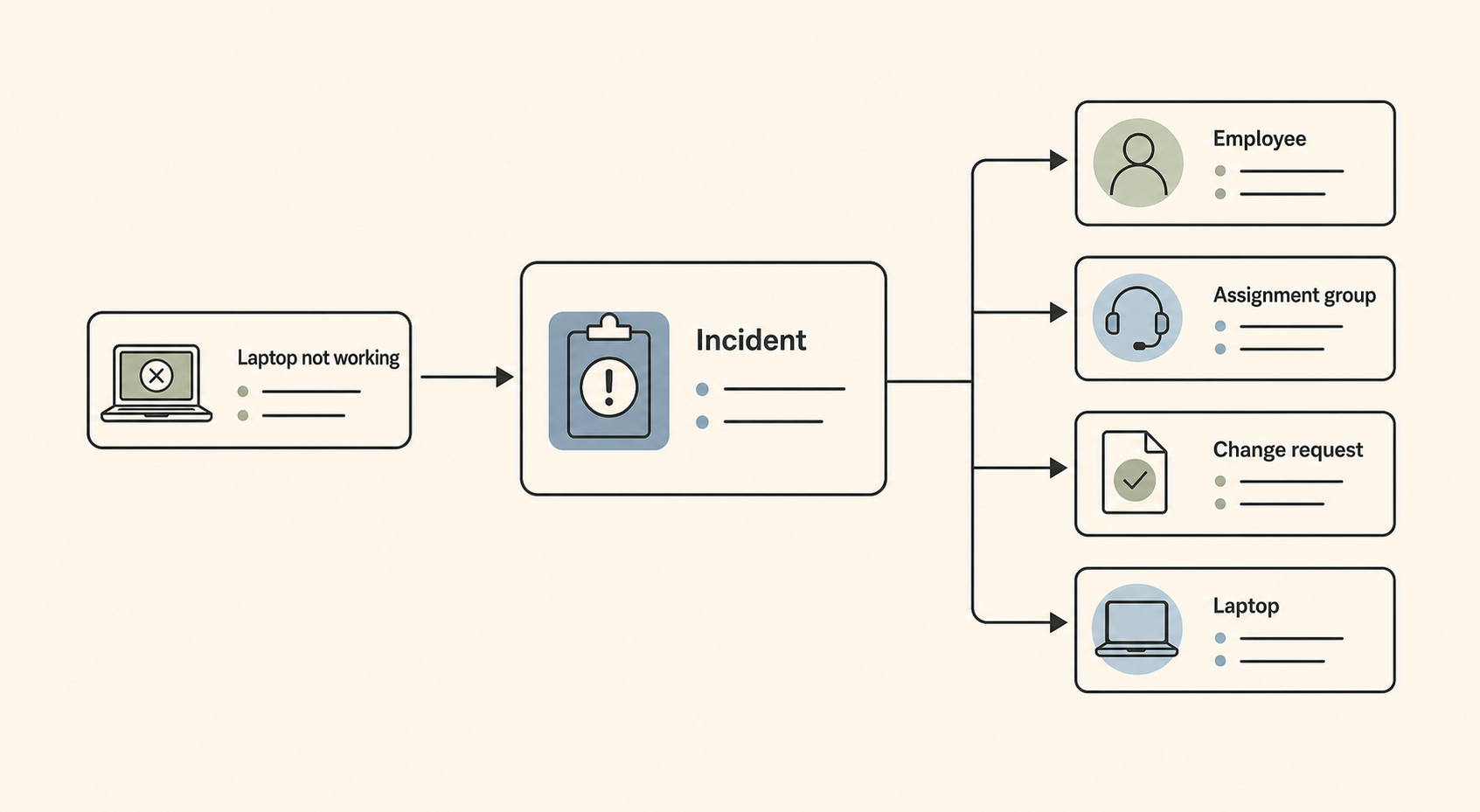
An employee reporting a broken laptop performs one simple action, but the system may create and connect records across several tables.

The incident must reference the right employee, support group, and laptop, while statuses, timelines, and values remain consistent across every related record. Existing generation worked for individual tables, but preserving those relationships required users to configure each one manually.

A laptop support request creates an incident connected to employee, assignment group, change request, and laptop records.

The design problem: How do we make connected records look realistic individually and make sense together, while keeping them as straightforward to generate as data for a single table?

Why this was important to solve

AI evaluation is only as useful as the data it is tested against.

Production data has the structure teams need, but it can contain sensitive information and may be restricted for development and testing.

Manually creating connected test data works at small scale, but not when hundreds of records span several related tables.

Generating each table independently creates another risk: realistic-looking records that may not make sense together. Multi-table generation gives teams representative relational data for evaluating AI without production data or manual relationship setup.

What we built

We built the Multi-table Data Generator in Now Assist Data Kit, giving teams a way to generate realistic data across related tables while preserving the relationships between them.

The strategy: Let the system handle repetitive setup, make relationships visible, and keep users in control.

1. Make relationships visible

Users needed to understand which tables were included and how they connected.

We exposed the relational structure while the system handled the work of discovering and configuring dependencies.

2. Generate from context

Starting with an empty scenario field would move too much work back to the user.

We used the selected tables and fields to suggest relevant scenarios that users could choose, refine, or replace. Define scenario → Describe → Generate became Recognize → Refine → Generate.

3. Make review part of generation

Producing records was not enough. Users needed to know whether the dataset matched what they intended to test.

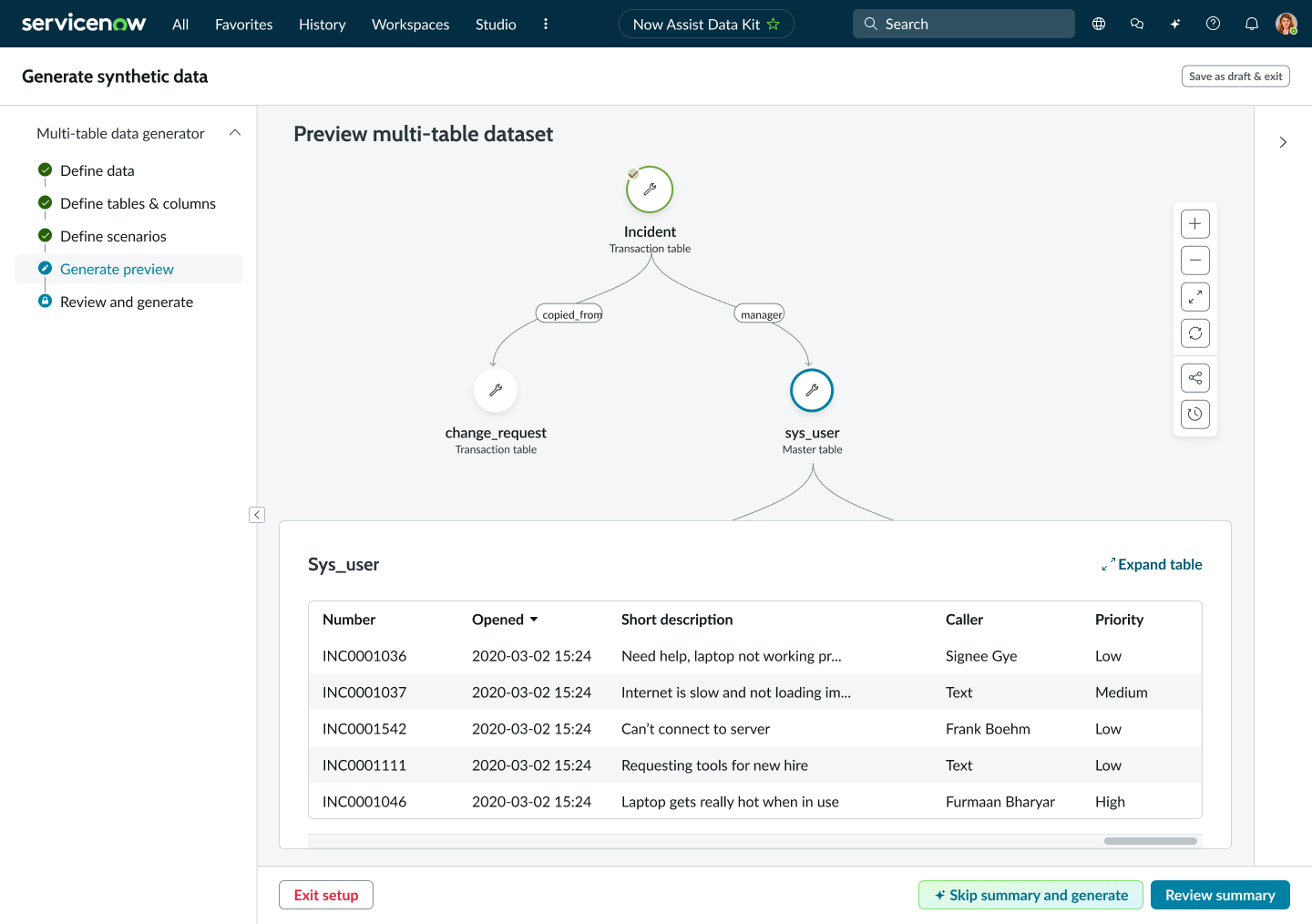
The preview made both the generated records and their relationships available for review before the dataset was used.

Preview of a generated multi-table dataset showing its records and relationships

Tradeoffs

We separated what we needed to prove now from what the complete experience would need later.

Validate before scaling. The guided flow constrained the canvas, but let us test a working graph and configuration experience before investing in an interaction that could scale.

Phase relational review. We provided enough visibility to evaluate records and connections first, while preserving deeper inspection as a requirement.

Automate setup, not judgment. The system proposed scenarios to remove repetitive work, while users could accept, refine, or ignore them.

Impact

Shipped in Now Assist Data Kit. The work moved from an early proof of concept to a shipped capability for generating connected synthetic datasets.

Validated with enterprises. Early engagements reinforced that realistic AI test data must represent meaningful situations across connected enterprise data.

Opened a larger product opportunity. The work expanded the question from preserving table relationships to identifying what other context makes AI test data representative.

Patent pending. Parts of this work are included in an ongoing patent application.

What I took from this

Complexity is not always a UX problem to remove. In infrastructure products, some of it helps users understand and trust what the system is doing. The design work is deciding what the product should handle and where user judgment still matters.

The first version also does not need to solve every interaction perfectly. For multi-table generation, we protected the core principles of visible relationships, meaningful review, and user control while shipping a smaller version that helped us learn what to deepen next.